Platforms
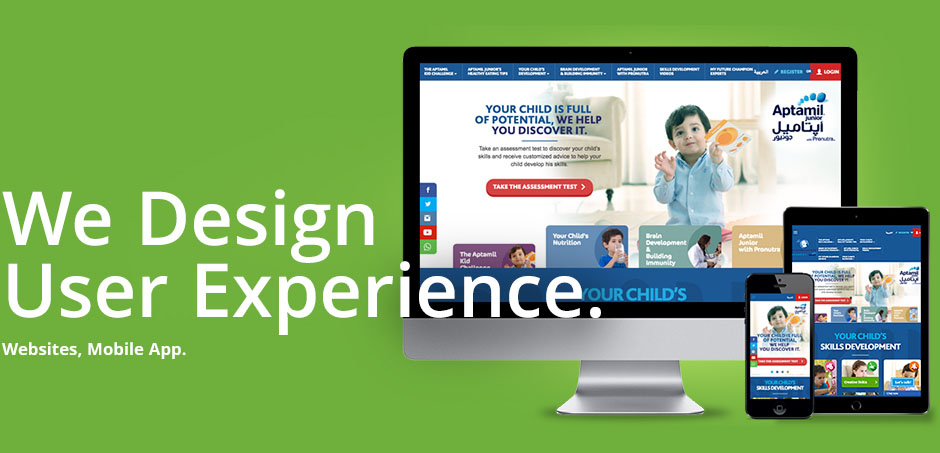
After thorough analysis of the business documentation provided by the client, we work on the wireframe using InVision, Adobe Illustrator and PhotoShop. The actual design is then mapped on a grid for responsiveness.
UX Strategy
After receiving the business strategy documentation, we scan it for the areas that are relevant to the UX strategy. This is followed by conducting a competitive benchmark to ascertain the best practices by the competitors of the client we are serving. We then pour over web analytics reports to determine what is working or has worked in the past. We then go back to the client and work out the personas and usage scenarios that the web platform will be visited by. We then look at our users will be interacting with the digital asset and work to limiting the steps taken from arrival to objective completion. This is followed by a roadmap with our findings and presented for approval. After approval, we create an internal roadmap that is presented to all the relevant teams to get started. The system is adopted to support social, mobile, and local experiences.
UX/UI Audit
We conduct an extensive audit to determine and diagnose the weaknesses of an existing site, the best practices in the industry, and the clutter free way forward for the client.
Like most audits, the purpose here is to discover pain points for the site visitor, conduct peer evaluation, identify accessibility errors, conduct UX testing, and survey the information architecture.

 Office 3102, - Saba Tower 1 - JLT, Dubai, UAE
 +971 4 424 0554